IoT It is used to connect household devices such as lights, air conditioners, doors, security cameras, and sound systems. Users can control these devices remotely via mobile phone or directly through voice commands, creating a more convenient and secure living environment.
"IoT in Industry"
Industrial Internet of Things (IIoT) provides technical support with sensors and software, enabling managers to quickly access the necessary data to address issues sooner and more effectively. IIoT helps control quality and ensure sustainability, increasing the efficiency of the supply chain as suppliers, distributors, and retailers have quick and accurate information about inventory levels, etc.
"IoT in Agriculture"
Due to climate change and water crises, farmers face numerous challenges such as land loss, soil erosion, and drought. These problems can be effectively addressed by utilizing and applying IoT-based farming systems. These systems provide solutions for managing and improving efficiency in crop and livestock farming. Sensors and monitoring systems are used to monitor the environment, irrigation needs, soil quality, and the health of crops and livestock. Data collected from these sensors helps farmers make intelligent decisions, optimize resource use, and increase productivity.
"IoT supports human healthcare."
IoT In the healthcare field, these devices provide solutions such as remote health monitoring, patient management, disease prevention promotion, and medical information surveillance. They are designed to track human activities such as heart rate, step counting, etc. This data is recorded and sent to doctors for detailed physical analysis. In addition to performing the basic functions mentioned above, these devices can also alert and send warnings to doctors and family members in emergencies such as asthma attacks or seizures, helping to better protect health and minimize medical costs.
"Smart retail"
IoT is increasingly proving its benefits in the retail sector, both in traditional brick-and-mortar retail and the currently booming online retail market. This is because IoT technology helps retailers connect with customers, easily communicate advertising messages, and enhance the customer experience when visiting their stores. Through IoT, physical retailers can compete with stronger online challengers. They can regain lost market share and attract consumers back to their stores, making it easier for them to buy more while saving money.
"Smart City"
IoT is being applied to manage and improve public services such as transportation, streetlights, waste management, water supply, and energy. Sensors and connected networks help collect data and manage city activities more efficiently and sustainably, contributing to an improved quality of life for citizens.
"Smart wearable devices"
Smart devices are no longer unfamiliar to us, such as Bluetooth headphones, smart glasses, and smartwatches. These devices are equipped with sensors and software that collect user data and information. They can help people monitor their health and fitness, assist in sports training, or provide entertainment. What makes them so popular is their compact, convenient design and aesthetic appeal.
"Applying IoT technology in automotive manufacturing"
IoT technology in automotive manufacturing offers many important applications. It helps monitor and manage equipment, manage the supply chain, control quality, and create a flexible and automated production environment. In addition, IoT plays a crucial role in collecting data from sensors and devices in automobiles. This allows manufacturers to analyze and better understand the operation and condition of automotive components, enabling timely maintenance and repair. Furthermore, IoT supports software update services, performance monitoring, and incident alerts to customers. All these applications enhance production efficiency, improve automotive quality, and create a better user experience.
Viettel, one of Vietnam's leading telecommunications providers, has announced that it has completed the rollout of IoT (Internet of Things) device connectivity to the entire city of Ho Chi Minh.
Parallel to the process of building network infrastructure for IoTViettel also stated that it is accelerating the deployment of the platform to soon provide an ecosystem of NB-IoT applications for smart cities, such as: smart parking, air quality monitoring, location tracking, measurement devices, etc.
For Hanoi, Viettel stated that it has deployed nearly 500 NB-IoT base stations in Cau Giay district and suburban districts. This September, Viettel's NB-IoT coverage will reach 100% of the capital city, with a similar number of base stations as Ho Chi Minh City.
According to the Global Mobile Association (GSMA), Viettel is the only Vietnamese representative among the top 50 mobile operators worldwide to successfully deploy 5G technology. Currently, only about 10 countries have commercialized 5G globally (South Korea, Japan, China, the US, Australia, the UK, Spain, Sweden, Norway, and Russia). Therefore, with its plan to commercialize 5G in 2020, Viettel will position Vietnam as one of the leading countries in 5G deployment.
All 5G base stations in Ho Chi Minh City utilize a smart antenna system with 64 transceivers, 8th-order modulation (256-QAM), and can transmit up to 4 parallel data streams simultaneously. This is also the most advanced configuration currently available for 5G deployment. Nokia is involved in providing solutions for 5G and IoT deployed by Viettel in Ho Chi Minh City (including core network, transmission equipment, and radio equipment).
The IoT technology on Viettel's 4G infrastructure, including base stations, antennas, and licensed frequency bands, enables the connection of a large number of IoT devices with the advantages of low power consumption, low bandwidth requirements, and wide coverage. This intelligent connectivity promises to bring enormous benefits and conveniences to both the community and businesses, while contributing to the development of a smart and sustainable city.
Interactive content: Interacting with customers through content is predicted to continue growing and become a prominent trend in Digital Marketing in 2023. Content in marketing includes text, images, videos, audio… everything that can be conveyed to users, even smells. This trend helps increase interaction between customers and brands.
Mobile Marketing: With the growth of mobile devices and the popularity of mobile applications, optimizing the customer experience on mobile devices is crucial. Therefore, focusing on mobile marketing is a key trend in Digital Marketing in 2023.
Short videos: The use of short videos has taken the world by storm in recent years and promises to continue its explosive growth in 2023. Short videos are typically concise, conveying messages in a more engaging, easy-to-understand, and appealing way. They offer numerous benefits, including easily capturing people's attention, high engagement rates, encouraging customers to watch more videos, and fostering greater brand interest.
Multi-channel marketing: Leveraging multiple marketing channels such as email, social media, online advertising, and traditional media is a prominent trend in digital marketing in 2023. Combining these channels increases customer reach and enhances engagement.
Utilizing Artificial Intelligence: By leveraging and combining AI-generated content, AI tools have helped marketers reap numerous benefits by better understanding their target audience, such as more targeted advertising. From these practical benefits, brands can leverage the following methods to train AI to create content that enhances their marketing strategies.
The B2C (Business-to-Consumer) market trend: E-commerce platforms like Shopee, Lazada, and Tiki have undergone significant growth and attracted a large number of users. However, the number of sellers is starting to saturate, and these platforms are no longer suitable or free for small-scale businesses.
SEO (Search Engine Optimization): Google prioritizes websites with high-quality content and good user experience metrics (e.g., time on site, time outside, page load time, etc.). In a fiercely competitive environment, SEO will be a marketing trend and a challenge for many professional marketers in 2023.
The Internet of Things (IoT) – a network of interconnected smart devices – is experiencing rapid growth and has enormous potential for the future. Below are some of the main IoT trends to watch in 2023.
1. Expansion of 5G
5G networks will play a crucial role in expanding the connectivity capabilities of the IoT. Faster data transmission speeds and lower latency will open up many new opportunities for IoT applications and services.
2. Artificial Intelligence (AI)
The strong connection between artificial intelligence (AI) and the Internet of Things (IoT) is not new, however, developments in these fields and the many new opportunities that open up promise to bring many exciting things. With the vast amount of data collected by smart devices, the need to use AI is inevitable.
3. Industry 4.0
IoT plays a central role in the Industry 4.0 revolution. Automated and intelligent systems will change how manufacturing and management are done, leading to optimization and increased productivity.
4. Security issues are receiving significant attention and are being strongly reinforced.
The sheer number of internet-connected devices worldwide means data is vulnerable to hacking and attacks. This real risk demands that manufacturers and operators implement preventative measures early on and establish robust security systems during the development of new devices.
5. Internet of Things
IoT will continue to expand connectivity to new devices and objects, not only in industries but also in everyday life. From smart homes and autonomous vehicles to smart healthcare and agriculture, everything will be linked to deliver greater convenience and efficiency.
6. Optimizing management performance in the energy sector.
The global energy crisis has spurred a focus on energy storage and infrastructure optimization. Leading developers have been providing devices and software that can monitor energy (or other utility) usage in real time.
7. Explore new markets
IoT will expand into new markets such as consumer electronics, healthcare services, tourism, and many other sectors. Businesses will seek new opportunities and create value from connecting smart devices.
Technology AI Artificial intelligence (AI) is a field in computer science concerned with creating computer systems capable of performing intelligent tasks previously only possible for humans. The goal of artificial intelligence is to create computers or systems capable of thinking, learning, problem-solving, and performing tasks automatically.
One of the main methods is machine learning, which allows computers to learn from data and improve performance over time. It relies on building mathematical models and using algorithms to understand and analyze data. A common form of machine learning is deep learning, in which large artificial neural networks are used to process information and learn from large datasets. It also utilizes many other techniques such as natural language processing (NLP), where computers are able to understand and generate natural language. Natural language processing systems can understand and generate text, speak, and interact with humans using natural language.
Artificial intelligence can be categorized into three different types of systems: analytical, human-inspired, and artificial intelligence. To function, it requires rich input data and appropriate algorithms. The model training process typically demands a large amount of data and powerful computing capabilities.
2. Practical applications
In transportation: Used in autonomous vehicles and traffic management systems to improve traffic safety and efficiency.
In healthcare: It is used to analyze medical data and assist doctors in diagnosing diseases and predicting treatment outcomes, analyzing medical images, predicting treatment results, and detecting abnormalities in medical data. Additionally, it can be applied to develop intelligent virtual assistants and chatbots, helping to provide medical information, health advice, and support human-machine interaction in the healthcare field.
In the banking sector, Mr. Nguyen Viet Phuong, Director of Software Development at Techcombank, stated that the bank's application of AI technology has helped verify information and identify customers through eKYC. In the context of the COVID-19 pandemic, when many customers were unable to visit banks in person, this application significantly increased the number of customers opening accounts.
Industry: Used to optimize production processes, reduce time, and increase productivity, from production planning to inventory management and quality control. It helps manage the supply chain, monitor and detect safety risks in the workplace, from visual surveillance to detect hazardous behavior to predicting and preventing workplace accidents. In particular, AI is applied to automate product quality checks.
In the restaurant industry, Mr. Nguyen Anh Nguyen, Chairman and CTO of Hatto Group, stated that AI and machine learning applications can help predict or mitigate risks related to food safety and hygiene before food reaches the table. Using AI, machine learning, and computer vision, the freshness and quality of fruits and vegetables can be monitored, helping to eliminate substandard produce.
In education: It is used to provide a wealth of useful data to help students choose the best courses for themselves. It helps teachers advise, suggest teaching methods, and automate classroom management tasks. In addition, many games and educational software programs have been developed to help students interact and learn in an engaging way.
In the trade and travel industries: AI is changing the way businesses operate, making trade more efficient and less costly. It's developing reliable, paperless electronic applications, faster identity verification, data sharing, and standardized digital document archiving procedures. The entry of AI into the trade sector will require the development of a range of new standards, enabling improved inventory management, demand prediction, and greater accuracy in manufacturing and on-time shipping.
3. Opportunities and Challenges
Opportunities
AI technology can assist in discovering new knowledge and advancing across many scientific and research fields. It can search for patterns, detect relationships, and make new discoveries that humans might overlook, contributing to an improved quality of life.
Many companies have recognized the power of Artificial Intelligence. Businesses have used applications to scale up, adding programming modules related to input data, training data, change data, partner management data, and technology data.
In Vietnam, several Artificial Intelligence Centers have been established at universities and research institutes to encourage the development of AI technology. These centers provide support and resources to researchers and collaborate with industry partners to develop AI solutions for various fields.
It can support disease diagnosis, medical image analysis, epidemic prediction, and the provision of intelligent healthcare services. It can help boost the efficiency and quality of healthcare, contributing to improved healthcare in Vietnam.
Challenges
AI technology requires large amounts of high-quality data to achieve good performance. However, collecting and accessing suitable data can be challenging, and if the data is inaccurate or not representative, its results may be unreliable.
While AI technology will create new and more dynamic job opportunities, it also has the potential to disrupt existing jobs. For example, the increasing use of robots, with robots and machines capable of performing many tasks currently done by humans, will lead to job losses.
AI technology is not evenly distributed, and access to it can create social inequality. Technical and financial disparities can lead to differences in access to and use of AI technology across countries, social classes, and regions.
A major challenge in AI technology is the ability to explain and understand the workings of models. In some cases, AI may produce accurate results but cannot explain how it made the decision, making it difficult for users to trust it and to detect fraud or errors.
For AI deployment and use, reliance on technology is a challenge. AI systems are complex and require appropriate infrastructure and resources to operate effectively. This can create a barrier for organizations and countries with limited resources.
AI is like a double-edged sword; it can force news organizations to cut staff to save costs, and it can even change business models that have existed for decades in the digital advertising industry.
4. Some achievements of AI technology
ChatGPT (short for Chat Generative Pre-training Transformer), a virtual assistant created by OpenAI, launched as a prototype in November 2022 and quickly gained attention for its ability to respond in detail and fluently across a wide range of knowledge areas.
Trained on a large amount of data from internet sources, it is capable of generating natural and intelligent responses based on the user's context and questions. It can understand and respond to user questions, requests, and information demands.
A portmantein of "deep learning" and "fake," deepfake refers to the use of deep learning models to synthesize and alter original content in a humanized and natural way. Although only a recent development, deepfake technology has become increasingly popular and can cause immeasurable harm to society. However, deepfakes can also be used for entertainment and creating creative content such as comedy videos, DIY projects, and art projects.
Deepfake ( Ảnh: sưu tầm)
Along with the advancement of deepfakes, there are also potential risks and consequences. Deepfakes can endanger reputation and personal security, causing suspicion and loss of trust in online content. Therefore, identifying and preventing deepfakes is becoming a challenge for researchers and governments.
Copying pictures using artificial intelligence.
Artificial intelligence technology can study the details of a painting's lines, colors, and lighting. From this, it can replicate a work of art into a new version. This technology was applied by artist and programmer Gene Kogan to create the famous painting "Mona Lisa" using AI algorithms.
Amazon's Machine Learning
Amazon SageMaker is a suite of AI tools and services provided by Amazon Web Services (AWS). It offers tools, frameworks, and services that enable developers to easily and efficiently build and deploy AI applications on Amazon's cloud platform, including a range of services such as Amazon SageMaker, Amazon Rekognition, Amazon Comprehend, Amazon Polly, and more. These services provide features such as natural language processing, image analysis, speech synthesis, and machine learning.
Simultaneously, solve real-world business problems in any sector and confidently innovate. Participate in building over 100,000 customers on AWS, based on over 20 years of experience at Amazon.
Chess and Video Games
One of the most notable achievements of AI technology in this field is Google DeepMind's AlphaGo program. AlphaGo defeated professional players in the game of Go, a game with complex rules and a large number of moves. AlphaGo used deep learning and reinforcement learning techniques to beat top opponents and brought about significant progress in this field. Additionally, games like Space Invaders, Pong, Doom, and World of Warcraft have also been successfully played against many experienced players.
5. The future
Artificial intelligence is gradually becoming an indispensable part of our daily lives. With significant advancements in this field, the future of AI technology looks promising, offering many opportunities and significant changes.
One of the key aspects of the future of AI technology is its widespread application across many industries. From healthcare to agriculture, from transportation to finance, it will be used to enhance efficiency and create new value. Smart healthcare systems can detect diseases earlier and improve diagnosis, while in agriculture, it can help increase productivity and manage resources.
AI technology is enhancing automated distribution in retail systems, making it more autonomous and personalized with realistic scenarios based on past performance and consumer trends. In the future, you could have faster deliveries using drones, a practice already underway and becoming a trend in the US.
AI technology is also expected to drive the development of self-driving cars and robots, from autonomous vehicles to robots assisting in daily tasks. This could bring significant benefits to humanity, from reducing traffic accidents to increasing work efficiency and saving time.
AI technology is opening up millions of new job opportunities. In fact, India nearly doubled its number of artificial intelligence engineers in 2019, a growth in India's AI industry supported by professionals transitioning into AI engineering roles by enhancing their skills through AI courses.
The future of artificial intelligence is promising and full of potential. It is advancing and playing an increasingly important role in our daily lives. It will become a powerful tool in all industries and fields.
With the goal of creating an intelligent and reliable assistant, ChatGPT is trained on a large amount of data from internet sources. This allows it to accumulate knowledge and understanding in many fields such as science, history, technology, culture, and more. ChatGPT's main role is to interact with users through chat. By asking questions or requesting guidance from you, it will try to answer and provide helpful information.
2. How ChatGPT works
ChatGPT is a model artificial intelligence it is based on a multi-purpose neural network. It is trained on a large amount of text data to understand and generate responses that match the user's questions or requests.
When you input a question or request into ChatGPT, the model processes it, including word segmentation and special character processing, to prepare the data for input into the neural network. From there, the model uses the neural network to process the input information and understand its meaning. Through this process, it searches for relevant information in the learned data and generates an answer that matches your question or request. This answer may include accurate information, explanations, or even suggested solutions.
ChatGPT has been optimized for dialogue through the use of Reinforcement Learning from Human Feedback (RLHF) – a method that uses human examples to guide the model toward desired behavior.
Information aggregation: It can automatically summarize information from various sources and display it as a summary for easy user access.
Applications in Communications and Marketing: ChatGPT can support the creation of quality content, including blog posts, articles, news reports, and social media content. It is capable of generating stories, product descriptions, and even writing simple source code.
Education and Training: ChatGPT can help teachers and instructors easily create teaching materials, answer student questions, and generate automated tests. It can help students research and gather information from various sources, and then synthesize and organize this information logically.
Medical consultation and support: ChatGPT can be used to provide consultation and support on basic medical issues. It can answer questions related to disease symptoms, provide information about medications, and offer basic advice.
Applications in translation: ChatGPT can also translate texts from one language to another. Therefore, those in the translation field can use this AI software to support their learning and work. In addition, it can remove everyday language barriers in daily life or the workplace.
Quick Response: It can provide specific and clear answers more quickly than other tools. In addition, it operates 24/7 to support users anytime, anywhere. A unique feature of this tool is its ability to provide personalized support to each user thanks to the content of previous conversations it has memorized.
Natural interaction: ChatGPT has the ability to lead conversations naturally and like a real person, providing a pleasant and comfortable feeling when chatting with them.
Learning and Improvement Capabilities: ChatGPT is based on neural networks and has the ability to learn from training data. Its performance can be improved and enhanced through training with new data and user feedback.
Save time: With the initial ideas suggested by ChatGPT, you have more time to edit and refine the final product to make it as appealing and suitable as possible.
Clear and grammatically correct articles: ChatGPT can distill ideas, condense important points, make them concise and easy to understand, without grammatical errors.
Availability and immediacy: ChatGPT can be deployed across multiple platforms and applications, from websites and mobile apps to automation systems. This allows users to access and use it anytime, anywhere.
Potential for generating misinformation: ChatGPT is trained on data available on the internet, which may include inaccurate or unreliable information. This means that ChatGPT can sometimes provide meaningless or incorrect answers to certain questions or situations.
Dependent on training data: It has very limited knowledge of the world after 2021 due to its database training. It cannot answer questions about recent events and sometimes provides incorrect or misleading information.
Requires significant costs and robust data processing capabilities: ChatGPT is a highly complex AI language model that requires a substantial amount of computing resources to function effectively. This means that running such applications can be expensive and may require access to specialized hardware and software systems.
Potential for confusion and misinterpretation: ChatGPT can misinterpret user intent or lead to misleading responses. This can occur in complex situations or when users do not provide sufficient information.
Lack of emotional intelligence: Although ChatGPT can generate seemingly empathetic responses, it doesn't possess true emotional intelligence. It can't detect subtle emotional cues or respond appropriately to complex emotional situations.
Limitations when creating long, structured articles: While it's possible to create essays and poems with coherent and grammatically correct sentences, it can be difficult to create long articles that follow a specific structure, format, or narrative.
Phishing: Hackers can generate text using ChatGPT's language models to create fake advertisements and other types of phishing materials. This makes things easier for attackers.
ChatGPT has the potential to evolve into an intelligent virtual assistant with deep insights into a wide range of industries, from healthcare and education to finance and law. It could become a powerful thinking machine, helping to solve complex problems and make intelligent decisions.
The Vietnamese technology industry is dominated by companies like FPT Software, Tiki, and VNG, which have been actively investing in AI. These companies are using AI to develop new products and services, optimize business processes, and improve customer experiences.
A key future goal is to improve the interpretability of ChatGPT. This ensures that users can clearly understand the decision-making process and have confidence in the information provided.
However, the future of ChatGPT will face unpredictable consequences if it does not find a solution to its vulnerability. Therefore, in addition to developing ChatGPT, it must be accompanied by control and security measures. Clear policies and guidelines will ensure that ChatGPT is not abused and guarantee the accuracy and reliability of the information.
The future of ChatGPT is a combination of artificial intelligence and human communication. While it cannot completely replace humans, it promises to bring convenience, assistance, and deeper insights, from solving everyday problems to supporting larger-scale decision-making.
Summer is the perfect time to enjoy the sunshine and work out outdoors. To enhance the effectiveness of your workouts, advanced tech accessories are essential. They help you track your progress, optimize performance, and provide a great experience. Below are some must-have tech accessories for your summer workouts:
Huawei Watch 4
When it comes to tech accessories, the Huawei Watch 4, a smart watch from the leading tech brand Huawei, cannot be overlooked. With its elegant design and smart features, the Huawei Watch 4 is a multi-functional fashion accessory that helps you monitor your health and stay connected to the world around you conveniently.
With its vibrant AMOLED display and high resolution, the Huawei Watch 4 delivers a high-quality and intuitive viewing experience for videos and images. Importantly, the Huawei Watch 4 supports 4G LTE connectivity, allowing you to use smart features without needing to carry your phone. You can make calls, send messages, browse the web, and use apps directly from your watch.
The most valuable feature of this device is its ability to support users in monitoring their health. With just one touch, the Huawei Watch 4 can check seven different indicators such as blood oxygen saturation (SpO2), heart rate, electrocardiogram (ECG), arterial stiffness detection, stress level, skin temperature, and respiratory function. The device is compatible with both iOS and Android.
Fitbit Flex
The Fitbit Flex is a smart bracelet from Fitbit, one of the pioneering companies in the fitness tracking device market. With its lightweight and stylish design, the Fitbit Flex is a great accessory.
One of the notable features of the Fitbit Flex is its sleep tracking capability. It automatically monitors your sleep time and quality, including deep sleep and wake times during the night. This helps you better understand your sleep patterns and find ways to improve your sleep quality. In addition, the Fitbit Flex also tracks activity, helping you maintain regular activity throughout the day, which in turn improves your overall health.
With its simple, water-resistant rubber design, this device tracks your steps, calories burned, and sleep time, then synchronizes all the data to your smartphone or computer. It also comes in a variety of colors to choose from.
Huawei FreeBuds 5
Certified HWA and Hi-Res Audio Wireless, these headphones deliver pure, high-fidelity sound. The treble range is clear, and the bass is particularly explosive thanks to technology that lowers frequencies to 16 Hz, boosting bass and sensitivity in the low-frequency range by up to 50%… All of this transforms the music listening experience into moments of emotional transcendence.
With a very secure fit, even during strenuous exercise like running, jumping rope, or head shaking, I rarely see these earbuds fall out. Users can easily control the earbuds to perform tasks such as answering calls, adjusting volume, and managing music playback simply by swiping or tapping the touch-sensitive area on the earbud instead of manipulating the phone.
Workout support software on smartphones
Some smartphone apps can offer many useful features for sports training through GPS, or sensor exercise tracking is readily available on smart devices. With the development of mobile technology, many different workout apps have been developed, offering numerous benefits to users. One of the most popular apps is MyFitnessPal. This app allows you to record information about your daily nutrition and calorie intake. You can track your calorie goals, weight, and weight loss progress. Additionally, MyFitnessPal offers thousands of exercises and workout programs to choose from. There are apps for fitness exercises, swimming, and training for several other sports. If you run or cycle, you can consider Strava. However, it also has the drawback of requiring you to wear your phone while exercising.
Armband phone holder
Most of us want to take advantage of the capabilities of smartphones when participating in outdoor activities such as running, hiking, cycling, etc. Besides connecting with friends or listening to music, smartphones offer countless apps that support sports activities, such as calculating calorie consumption, monitoring heart rate, and accurately counting movements like a doctor or a professional training assistant. This is also a necessary choice in the exercise process.
 BENEFITS OF INTEGRATING ERP WITH EXTERNAL APPLICATIONS


 	Enhance management capabilities: Integration ERP external applications enhance the management capabilities of ERP systems by providing additional information and data from other applications. This improves decision-making and forecasting, increases labor productivity, and minimizes risks.
 	Optimizing business processes: Integration ERP external applications help optimize business processes by automating procedures and minimizing manual operations. This enhances efficiency and reduces time and costs.
 	Enhance integration capabilities: Integration ERP External applications enhance the integration capabilities of ERP systems with other applications such as CRM, supply chain management (SCM), project management (PM), etc. This improves the connectivity of the ERP system and expands its integration potential in the future.
 	Enhance the user experience.: Integration ERP External applications enhance the user experience by providing new and useful features. This increases user satisfaction and boosts productivity.
 	Reduce time and costs.: Integration ERP External applications help minimize time and costs by automating processes and reducing manual operations. This enhances efficiency and reduces the time and expenses associated with business operations.

HOW TO INTEGRATE ERP WITH EXTERNAL APPLICATIONS

 	Integration via APIThis is the most common and simplest way to integrate. ERP with external applications, APIs (Application Programming Interfaces) allow external applications to communicate with the ERP system through provided programming interfaces. These interfaces can provide information about data, operational status, and other management functions. Developers can use APIs to create external applications and connect them to the ERP system.
 	Use the built-in tools.Integration tools are applications or utilities designed to connect ERP systems with external applications. These tools are typically provided by vendors. ERP or other software companies. These tools typically have simple interfaces for configuration and integrated management.
 	Using middlewareMiddleware is applications designed to connect ERP systems with external applications. These applications often support a variety of other applications and can be customized to suit specific business needs. Some of the most popular middleware includes Boomi, MuleSoft, and Dell Boomi.

When integrating ERP with external applications, it is essential to ensure that the data shared between systems is accurate and reliable. Thorough testing is required before integration deployment and retesting after completion to ensure the system's stability and efficiency.
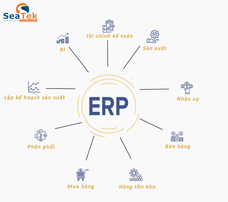
ERP (Enterprise Resource Planning) is software that integrates business processes and enterprise resource management. ERP systems are widely used in businesses of all sizes. Instead of working with separate software and independent data as before, it provides tools for financial management, production management, inventory management, human resource management, and customer management in a single, all-in-one system with a shared data source, helping businesses manage their operations more efficiently.Nâng cao hiệu suất kinh doanh với hệ thống ERP
1. The role of ERP systems in businesses
Financial management: ERP systems help manage a company's financial activities, including accounting management, asset management, revenue and expenditure management, and banking management.
Production Management: ERP systems help manage a company's production activities, from production planning and purchasing to inventory management and manufacturing.
Human Resources ManagementERP systems help manage a company's human resources activities, including employee record management, payroll management, timekeeping management, and training management.
Project Management: planning, cost estimation, work allocation, payment, time calculation, implementing unit, operational management.
Inventory management: Inventory management (inflow, outflow, and stock levels), warehouse management based on various criteria (lot, expiration date, location, etc.), and inventory reporting.
Process optimization: ERP systems help optimize business processes by increasing efficiency and reducing costs.
2. The Importance of ERP Systems for Businesses
The importance of ERP system the importance of ERP in business management is undeniable. Here are some of the key aspects of ERP in business management:
Simplify business processes and optimize work efficiency.: ERP simplifies business processes by integrating processes and data into a single system. This reduces time, effort, and costs for businesses.
Optimizing business performance: ERP systems help optimize business performance by enabling more accurate, efficient, and faster management of business operations.
Increase transparency: ERP systems help increase transparency in business operations by enabling accurate and comprehensive management of business data and information.
Better supply chain management: ERP helps manage supply chain-related activities more efficiently, from purchasing and inventory management to transportation management.
Better financial and human resource management: ERP helps manage supply chain-related activities more efficiently, from purchasing and inventory management to transportation management.
Increase flexibility: ERP systems enhance business flexibility by enabling remote management of business operations and access to data from anywhere.
Development orientation: ERP helps businesses navigate their development by providing accurate and comprehensive business information to support sound business decisions that align with the company's development strategy.
3. Steps for deploying an ERP system
Deployment ERP system implementing an ERP system is a complex and multi-step process, requiring strict adherence to all steps to ensure the implementation meets expectations. Below are the main steps for implementing an ERP system in a business:
Planning: Before implementation, detailed planning is essential. This planning should include necessary information such as the project budget, the number of participants, the desired ERP system, etc.
Pre-requirements survey and analysis: After planning, the first thing to do is to identify the business requirements to understand the features that will help the business solve problems in its operations.
Selecting personnel to participate: Personnel always play a crucial role in any project. The quality of personnel greatly impacts project success, so it's essential to select suitable personnel who understand the system. Additionally, the IT department will provide initial consultation to the leadership team on ERP platform-related issues. They will also collaborate with the implementation team's experts and provide technical support after handover.
Choosing a reputable ERP implementation consulting partner: Currently, there are many different ERP solution providers, so an evaluation and comparison are necessary to find the most suitable system. For example, Odoo is a comprehensive and optimized ERP software for businesses today. It is open-source software that allows users to edit and customize all functions, with over 10,000 different modules to serve every industry and specific business.
Design and development: After selecting an ERP system, it is necessary to design and develop customizations and integrations to suit the business requirements and processes of the enterprise.
System testing and verification: Before deploying an ERP system, it needs to be thoroughly tested to minimize errors and disruptions to business operations when officially implemented within the enterprise.
Implementation and training: After completing the above steps, the ERP system needs to be implemented throughout the entire enterprise, and employees need to be trained on how to use it. Organizing comprehensive ERP application training for the entire staff is extremely important and necessary, requiring time and effort from both the leadership and the employees. We need to carefully discuss this with the vendor, especially clearly determining whether this training cost is included in the software purchase cost or will be added later.
System maintenance and upgrades: After implementing ERP according to the above process, your business can begin actual operation. However, errors are inevitable during operation, so managing and maintaining the ERP system is necessary to ensure it always functions well and meets the business's requirements in the long term. Additionally, during use, your business may also need new features, upgrades, and customizations as needed.
4. Modules in the ERP system
ERP system comprises various modules, each a group of different features, aimed at serving the business management process. The following are some common modules found in ERP systems:
Financial Management (CRM): The CRM module manages customer information, communication, and marketing activities for the business.
Financial Management (FI): The FI module manages a company's financial information, including assets, liabilities, revenue, and expenses.
Accounting Management (CO): The CO module manages information on physical materials management, cost of goods sold, and administrative expenses.
Materials Management (MM): The MM module manages purchasing, inventory, material procurement planning, material requirements management, and supplier management.
Project Management (PS): The PS module manages information about projects such as project planning, project preparation, project management, reporting, and project costs.
Production Management (PP): The PP module manages production information, sales planning, and production planning.
Human Resources (HR) Management: This module manages information on human resources, recruitment, payroll, time and benefits management, training, and events.
Supply Chain Management (FSCM): This module manages information on the company's supply chain, including order management, production and shipping, risk and budget management, and payments.
Quality Management (QM): The QM module manages information on quality control of the company's products and services.
5. Recent developments in ERP systems
Today, Vietnam has entered a more comprehensive and international integration phase, with international relations, trade, etc. This process brings with it enormous challenges and increasingly fierce competition. In recent years, ERP system ERP systems have advanced significantly in functionality and integrated many new technologies to improve business performance, becoming key to integrating critical business features within an organization. The widespread adoption of ERP systems demonstrates their importance to successful businesses. Here are some of the key trends currently developing: