


A must-have range of tech accessories for your summer workouts.

Summer is the perfect time to enjoy the sunshine and work out outdoors. To enhance the effectiveness of your workouts, advanced tech accessories are essential. They help you track your progress, optimize performance, and provide a great experience. Below are some must-have tech accessories for your summer workouts:

Huawei Watch 4

When it comes to tech accessories, the Huawei Watch 4, a smart watch from the leading tech brand Huawei, cannot be overlooked. With its elegant design and smart features, the Huawei Watch 4 is a multi-functional fashion accessory that helps you monitor your health and stay connected to the world around you conveniently.

Phụ kiện Công nghệ

With its vibrant AMOLED display and high resolution, the Huawei Watch 4 delivers a high-quality and intuitive viewing experience for videos and images. Importantly, the Huawei Watch 4 supports 4G LTE connectivity, allowing you to use smart features without needing to carry your phone. You can make calls, send messages, browse the web, and use apps directly from your watch.

The most valuable feature of this device is its ability to support users in monitoring their health. With just one touch, the Huawei Watch 4 can check seven different indicators such as blood oxygen saturation (SpO2), heart rate, electrocardiogram (ECG), arterial stiffness detection, stress level, skin temperature, and respiratory function. The device is compatible with both iOS and Android.


Fitbit Flex

The Fitbit Flex is a smart bracelet from Fitbit, one of the pioneering companies in the fitness tracking device market. With its lightweight and stylish design, the Fitbit Flex is a great accessory. 

Phụ kiện Công nghệ

One of the notable features of the Fitbit Flex is its sleep tracking capability. It automatically monitors your sleep time and quality, including deep sleep and wake times during the night. This helps you better understand your sleep patterns and find ways to improve your sleep quality. In addition, the Fitbit Flex also tracks activity, helping you maintain regular activity throughout the day, which in turn improves your overall health.

With its simple, water-resistant rubber design, this device tracks your steps, calories burned, and sleep time, then synchronizes all the data to your smartphone or computer. It also comes in a variety of colors to choose from.

Huawei FreeBuds 5

Certified HWA and Hi-Res Audio Wireless, these headphones deliver pure, high-fidelity sound. The treble range is clear, and the bass is particularly explosive thanks to technology that lowers frequencies to 16 Hz, boosting bass and sensitivity in the low-frequency range by up to 50%… All of this transforms the music listening experience into moments of emotional transcendence.

Phụ kiện Công nghệ

With a very secure fit, even during strenuous exercise like running, jumping rope, or head shaking, I rarely see these earbuds fall out. Users can easily control the earbuds to perform tasks such as answering calls, adjusting volume, and managing music playback simply by swiping or tapping the touch-sensitive area on the earbud instead of manipulating the phone. 


Workout support software on smartphones

phụ kiện Công nghệ

Some smartphone apps can offer many useful features for sports training through GPS, or sensor exercise tracking is readily available on smart devices. With the development of mobile technology, many different workout apps have been developed, offering numerous benefits to users. One of the most popular apps is MyFitnessPal. This app allows you to record information about your daily nutrition and calorie intake. You can track your calorie goals, weight, and weight loss progress. Additionally, MyFitnessPal offers thousands of exercises and workout programs to choose from. There are apps for fitness exercises, swimming, and training for several other sports. If you run or cycle, you can consider Strava. However, it also has the drawback of requiring you to wear your phone while exercising.


Armband phone holderphụ kiện Công nghệ

Most of us want to take advantage of the capabilities of smartphones when participating in outdoor activities such as running, hiking, cycling, etc. Besides connecting with friends or listening to music, smartphones offer countless apps that support sports activities, such as calculating calorie consumption, monitoring heart rate, and accurately counting movements like a doctor or a professional training assistant. This is also a necessary choice in the exercise process.
3 cách tích hợp ERP với ứng dụng bên ngoài

3 ways to integrate ERP with external applications

 BENEFITS OF INTEGRATING ERP WITH EXTERNAL APPLICATIONS

3 cách tích hợp ERP với ứng dụng bên ngoài
  • Enhance management capabilities: Integration ERP external applications enhance the management capabilities of ERP systems by providing additional information and data from other applications. This improves decision-making and forecasting, increases labor productivity, and minimizes risks.
  • Optimizing business processes: Integration ERP external applications help optimize business processes by automating procedures and minimizing manual operations. This enhances efficiency and reduces time and costs.
  • Enhance integration capabilities: Integration ERP External applications enhance the integration capabilities of ERP systems with other applications such as CRM, supply chain management (SCM), project management (PM), etc. This improves the connectivity of the ERP system and expands its integration potential in the future.
  • Enhance the user experience.: Integration ERP External applications enhance the user experience by providing new and useful features. This increases user satisfaction and boosts productivity.
  • Reduce time and costs.: Integration ERP External applications help minimize time and costs by automating processes and reducing manual operations. This enhances efficiency and reduces the time and expenses associated with business operations.

HOW TO INTEGRATE ERP WITH EXTERNAL APPLICATIONS

  • Integration via APIThis is the most common and simplest way to integrate. ERP with external applications, APIs (Application Programming Interfaces) allow external applications to communicate with the ERP system through provided programming interfaces. These interfaces can provide information about data, operational status, and other management functions. Developers can use APIs to create external applications and connect them to the ERP system.
  • Use the built-in tools.Integration tools are applications or utilities designed to connect ERP systems with external applications. These tools are typically provided by vendors. ERP or other software companies. These tools typically have simple interfaces for configuration and integrated management.
  • Using middlewareMiddleware is applications designed to connect ERP systems with external applications. These applications often support a variety of other applications and can be customized to suit specific business needs. Some of the most popular middleware includes Boomi, MuleSoft, and Dell Boomi.
When integrating ERP with external applications, it is essential to ensure that the data shared between systems is accurate and reliable. Thorough testing is required before integration deployment and retesting after completion to ensure the system's stability and efficiency.
Nâng cao hiệu suất kinh doanh với hệ thống ERP

ERP systems help improve business efficiency.

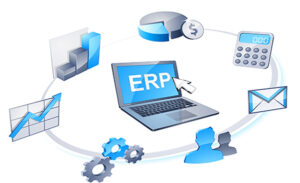
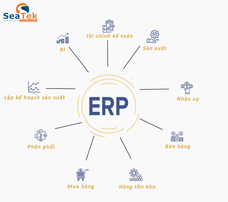
ERP (Enterprise Resource Planning) is software that integrates business processes and enterprise resource management. ERP systems are widely used in businesses of all sizes. Instead of working with separate software and independent data as before, it provides tools for financial management, production management, inventory management, human resource management, and customer management in a single, all-in-one system with a shared data source, helping businesses manage their operations more efficiently.
Nâng cao hiệu suất kinh doanh với hệ thống ERP

1. The role of ERP systems in businesses

  • Financial management: ERP systems help manage a company's financial activities, including accounting management, asset management, revenue and expenditure management, and banking management.
  • Production Management: ERP systems help manage a company's production activities, from production planning and purchasing to inventory management and manufacturing.
  • Supply chain management: supplier planning, purchase orders, purchasing, inventory management, warehousing.
  • Human Resources ManagementERP systems help manage a company's human resources activities, including employee record management, payroll management, timekeeping management, and training management.
  • Project Management: planning, cost estimation, work allocation, payment, time calculation, implementing unit, operational management.
  • Inventory management: Inventory management (inflow, outflow, and stock levels), warehouse management based on various criteria (lot, expiration date, location, etc.), and inventory reporting.
  • Process optimization: ERP systems help optimize business processes by increasing efficiency and reducing costs.

2. The Importance of ERP Systems for Businesses

The importance of ERP system the importance of ERP in business management is undeniable. Here are some of the key aspects of ERP in business management:
  • Simplify business processes and optimize work efficiency.: ERP simplifies business processes by integrating processes and data into a single system. This reduces time, effort, and costs for businesses.
  • Optimizing business performance: ERP systems help optimize business performance by enabling more accurate, efficient, and faster management of business operations.
  • Increase transparency: ERP systems help increase transparency in business operations by enabling accurate and comprehensive management of business data and information.
  • Better supply chain management: ERP helps manage supply chain-related activities more efficiently, from purchasing and inventory management to transportation management.
  • Better financial and human resource management: ERP helps manage supply chain-related activities more efficiently, from purchasing and inventory management to transportation management.
  • Increase flexibility: ERP systems enhance business flexibility by enabling remote management of business operations and access to data from anywhere.
  • Development orientation: ERP helps businesses navigate their development by providing accurate and comprehensive business information to support sound business decisions that align with the company's development strategy.

3. Steps for deploying an ERP system

Deployment ERP system implementing an ERP system is a complex and multi-step process, requiring strict adherence to all steps to ensure the implementation meets expectations. Below are the main steps for implementing an ERP system in a business:
  • Planning: Before implementation, detailed planning is essential. This planning should include necessary information such as the project budget, the number of participants, the desired ERP system, etc.
  • Pre-requirements survey and analysis: After planning, the first thing to do is to identify the business requirements to understand the features that will help the business solve problems in its operations.
  • Selecting personnel to participate: Personnel always play a crucial role in any project. The quality of personnel greatly impacts project success, so it's essential to select suitable personnel who understand the system. Additionally, the IT department will provide initial consultation to the leadership team on ERP platform-related issues. They will also collaborate with the implementation team's experts and provide technical support after handover.
  • Choosing a reputable ERP implementation consulting partner: Currently, there are many different ERP solution providers, so an evaluation and comparison are necessary to find the most suitable system. For example, Odoo is a comprehensive and optimized ERP software for businesses today. It is open-source software that allows users to edit and customize all functions, with over 10,000 different modules to serve every industry and specific business.
  • Design and development: After selecting an ERP system, it is necessary to design and develop customizations and integrations to suit the business requirements and processes of the enterprise.
  • System testing and verification: Before deploying an ERP system, it needs to be thoroughly tested to minimize errors and disruptions to business operations when officially implemented within the enterprise.
  • Implementation and training: After completing the above steps, the ERP system needs to be implemented throughout the entire enterprise, and employees need to be trained on how to use it. Organizing comprehensive ERP application training for the entire staff is extremely important and necessary, requiring time and effort from both the leadership and the employees. We need to carefully discuss this with the vendor, especially clearly determining whether this training cost is included in the software purchase cost or will be added later.
  • System maintenance and upgrades: After implementing ERP according to the above process, your business can begin actual operation. However, errors are inevitable during operation, so managing and maintaining the ERP system is necessary to ensure it always functions well and meets the business's requirements in the long term. Additionally, during use, your business may also need new features, upgrades, and customizations as needed.

4. Modules in the ERP system

 ERP system comprises various modules, each a group of different features, aimed at serving the business management process. The following are some common modules found in ERP systems:
  • Financial Management (CRM): The CRM module manages customer information, communication, and marketing activities for the business.
  • Financial Management (FI): The FI module manages a company's financial information, including assets, liabilities, revenue, and expenses.
  • Accounting Management (CO): The CO module manages information on physical materials management, cost of goods sold, and administrative expenses.
  • Materials Management (MM): The MM module manages purchasing, inventory, material procurement planning, material requirements management, and supplier management.
  • Project Management (PS): The PS module manages information about projects such as project planning, project preparation, project management, reporting, and project costs.
  • Production Management (PP): The PP module manages production information, sales planning, and production planning.
  • Human Resources (HR) Management: This module manages information on human resources, recruitment, payroll, time and benefits management, training, and events.
  • Supply Chain Management (FSCM): This module manages information on the company's supply chain, including order management, production and shipping, risk and budget management, and payments.
  • Quality Management (QM): The QM module manages information on quality control of the company's products and services.

5. Recent developments in ERP systems

Today, Vietnam has entered a more comprehensive and international integration phase, with international relations, trade, etc. This process brings with it enormous challenges and increasingly fierce competition. In recent years, ERP system ERP systems have advanced significantly in functionality and integrated many new technologies to improve business performance, becoming key to integrating critical business features within an organization. The widespread adoption of ERP systems demonstrates their importance to successful businesses. Here are some of the key trends currently developing:
  • Cloud computing
  • Artificial intelligence and machine learning
  • Integration of new applications and solutions
  • Integration of new technologies such as IoT and blockchain
  • User-focused ERP solutions